Finding great talent is a challenge every company faces. Some organizations rely on internal recruitment teams, while others work with headhunters to identify the right people. But what about AI? Can AI really help you find your next great hire?
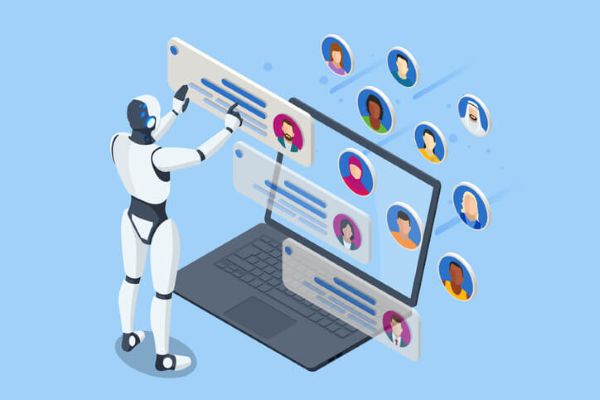
What many top recruitment agencies in Canada are seeing is that, in many cases, the job search and hiring process has essentially become AI vs. AI.
Companies are using AI to write job descriptions, screen candidates, review resumes and support hiring decisions. Candidates are using AI to create resumes, tailor applications to job descriptions and improve their chances of getting through an ATS.
Both sides are using technology to gain an advantage.
So what’s missing?
The human element.
A recent Forbes article by Rachel Wells explores this growing problem. She points to a paradox in recruitment: 77% of HR teams reportedly use AI, while 93% plan to increase their adoption. At the same time, 67% of hiring managers say AI-generated resumes can sabotage or slow down the hiring process.
The technology intended to make hiring more efficient can actually create more noise.
Keep reading: The Great AI Rehire: Why Companies Are Bringing Back the Talent They Replaced
AI Can Find a Match. Can It Find the Right Person?
AI is very good at identifying patterns. It can quickly compare resumes against job descriptions, identify specific skills and qualifications, and process hundreds of applications.
There is a difference between finding someone who matches a job description and finding someone who will succeed in the role.
Two candidates might have similar qualifications and experience on paper. One may have a history of succeeding in environments similar to yours, while the other may have struggled with employee retention or cultural fit.
AI may identify both as strong matches.
An experienced recruiter is more likely to ask: Which person is actually right for this organization?
That requires context, judgment and conversation.
A resume doesn’t always explain why someone left a company, why they changed industries, or how they performed in a difficult situation. It may not show how they lead a team, communicate with senior executives or respond under pressure.
Those are things that often come out during conversations with an experienced recruiter.
Headhunter insights: 8 AI-Proof Skills Employers Are Hiring For in 2026
AI Should Support Recruiters, Not Replace Them
There is no reason for recruitment firms to ignore AI.
AI can be extremely useful for sourcing, research, administrative tasks, resume screening and managing large volumes of information. Used properly, it can make recruiters more efficient and give them more time to focus on candidates.
That’s where the distinction matters.
AI should handle more of the repetitive work. Recruiters should handle more of the human work.
The best recruiters don’t simply match resumes to job descriptions. They understand the organization, the hiring manager, the team and what success in the position actually looks like.
They can identify transferable experience that an automated system might overlook. They can ask follow-up questions, challenge assumptions and uncover information that isn’t obvious on a resume.
Most importantly, they provide context.
So, Can AI Really Find Your Next Great Hire?
Maybe. But it shouldn’t do it alone.
The future of recruitment isn’t necessarily AI versus recruiters. It’s AI plus recruiters.
AI can make the hiring process faster and more efficient. But great hiring decisions require more than keywords, algorithms and automated screening.
They require understanding people.
At IQ PARTNERS, we believe technology should enhance recruitment, not replace the expertise and human connection that make good hiring decisions possible.
AI is going to play an increasingly important role in recruitment. The companies that get the most from it will be those that understand both its strengths and its limitations. Use AI to make recruitment more efficient. Use experienced recruiters to make it better.